
Charging Ahead: 5 Ways EV Infrastructure Is Advancing
- Deena Salim
- Jul 17, 2025
- 4 min read

56% of prospective EV drivers struggle to locate public chargers, based on research from the AA. Additionally, Arval Mobility Observatory Barometer found every 2 in 5 fleet operators mention there aren't enough public charge points, 39% report no home charging access for employees, and 25% entirely lack workplace chargers. These challenges have made it a big barrier to fleet electrification, but advancements are arriving quickly. These solutions address pivotal points like availability, payments and reliability building a more accessible path for fleets and drivers to go electric.
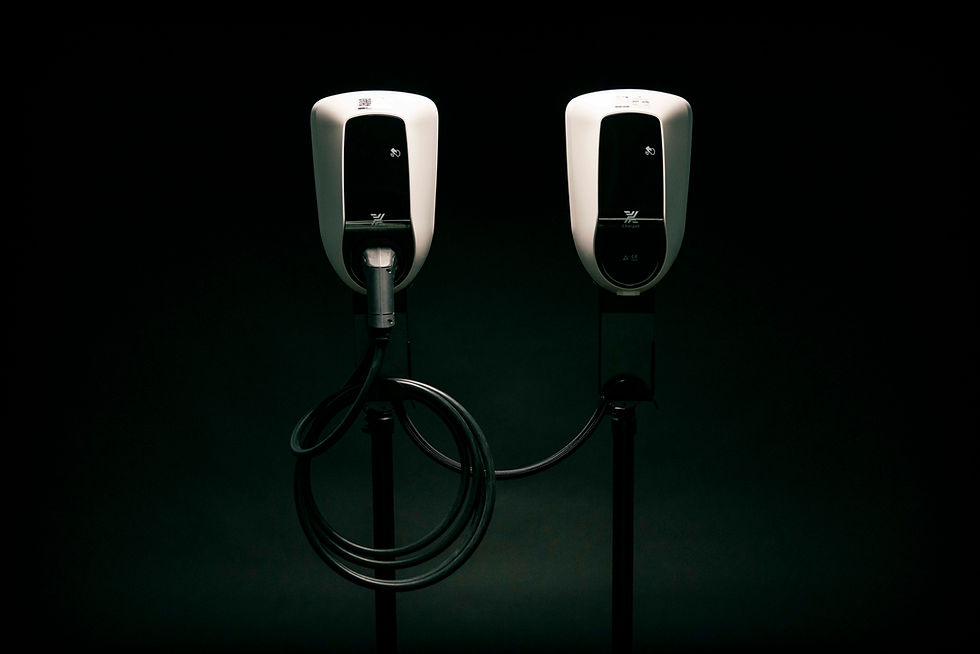
Here are 5 key ways charging infrastructure is advancing across the UK to help wage these gaps:
1) Zapmap Launches Card to Simplify Payments
Having to navigate various apps and payment portals can be frustrating, but Zapmap has introduced a new EV charging payment card, which allows drivers to start a charge at over 40,000 points across 30+ networks. This seamless solution fits perfectly into their journey, as drivers tap the card at supported chargers, and are able to view sessions and receipts directly in the app portal. It is currently available to Zapmap Premium annual subscribers for a small fee; however, the card rollout will expand to all Zapmap users later this summer. With the UK’s total charge points rising by 27% and over 8,670 new installations, tools like this are especially valuable for longer en-route journeys, making EV operations simpler for fleet drivers on the move
2) First Bus Opens Depot Charging to the Public
For the first time, First Bus is opening its EV charging depots to the public under its “First Charge” initiative. Starting at its Caledonia depot in Glasgow, the superhub will offer high-powered 150kW–350kW chargers powered by renewable energy to both individual drivers and business fleets. This addresses a critical gap for many commercial operators needing a reliable, high-speed charging hub during operational downtimes. Not only are they further supporting decarbonization by sharing depot charging with partners like DPD and Centrica, First Bus is helping fleets maximize vehicle uptime and addressing this critical gap.
3) Paythru Pushes for Better Payment Experiences
Payment inconsistency can be another frustration which is why Paythru advocates for a smoother, more transparent payment experience across EV networks. Including clearer pricing communication and consistent transaction methods which are not only limited to specific networks. This universal payment method is similar to modern banking apps, allowing for less of a headache for fleet managers as it makes cost tracking easier and drivers happier without any unnecessary complications or surprises. Their full virtual showcase of their updated Charter for Smoother EV Charging Payments will be presented on Tuesday July 29th.
4) BeEV Builds Regional Hub Expansion
BeEV has invested €1 million to launch Shropshire’s largest EV charging hub at Telford Centre, featuring 18 ultra-fast 300kW chargers capable of adding 325 miles of range in 20 minutes. In Shropshire, a region with historically low EV adoption, this move expands reliable, future proof, infrastructure to help keep up with the UK’s rapidly growing EV market. This investment follows BeEV’s €20 million initiative to install over 200 ultra-rapid charging bays across 22 retail and leisure sites nationwide, supporting regional and retail fleet charging flexibility. Ensuring that no area is left behind in the UK's transition to electrification.
5) Government Backs Charging Expansion with £63 Million
To boost charging infrastructure and break barriers to EV operations, the UK government has committed £63 million in the following aspects:
£25 million for local authorities to install cross-pavement charging channels, allowing drivers to safely charge from domestic energy sources
£30 million to help fleets develop depot charging facilities
£8 million to electrify ambulances and medical fleets across 200+ NHS sites
This funding supports tens of thousands of UK households with access to affordable at-home charging, while also expanding depot charging capabilities for commercial fleets. Additionally for the first time, the government is set to enable signposting of large EV hubs on major A-roads, providing current and future EV drivers with confidence and clarity when planning routes.
Building the Road to Electric Fleets
The barriers around the availability, transparency and reliability within EV charging are real – but as these advancements show, the infrastructure is rapidly evolving to support the transition to electric fleets. This can enable better organization, better vehicle uptime, reduced driver frustration and a more dependable infrastructure that helps operations run smoothly for both fleet operators and drivers.
Smarter Fleet Electrification Starts Here
At EVE we understand that electrifying your fleet is not just about buying EVs; it’s about building a complete plan that aligns with your operational needs and goals. We help fleet operators navigate these changes with tailored electrification strategies, data driven insights and end-to-end support. We can analyse total cost of ownership savings, plan charging infrastructure strategies, and identify optimal investment opportunities. Here at EVE we ensure your transition to electric is efficient, transparent and sustainable.
Ready to transition your fleet? Let EVE be your guide to smarter, more sustainable mobility.


Comments